Tools & Comparisons
12 min
Best Tableau Alternatives for Small Teams in 2026
Leaving Tableau as a small team? Match the replacement to which part of Tableau you keep and which cost, setup, or specialist burden you are trying to shed.
Read More

TL;DR — Best Dataiku alternatives in 2026
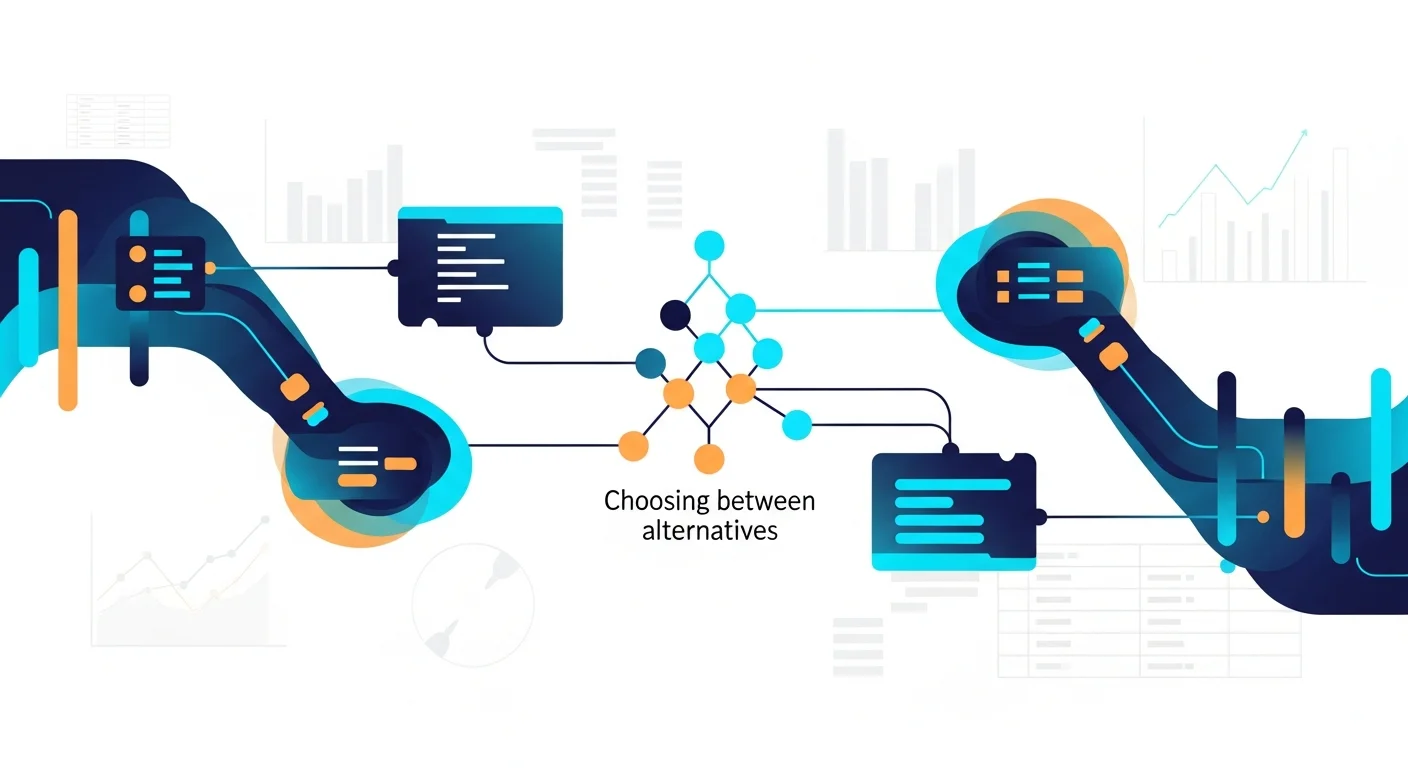
If you need business analysis, dashboards, scheduled reporting, and alerts without building a full ML platform: Anomaly AI. For open-source visual workflow building: KNIME. For data prep: Alteryx. For lakehouse-native ML at enterprise scale: Databricks. For SQL + Python notebooks: Hex. For auto-ML: H2O.ai and DataRobot.
Most teams searching for a Dataiku alternative want useful analysis from their data — they don't have a dedicated MLOps team, and the enterprise sales cycle is a non-starter. We built Anomaly AI for exactly that gap: connect Excel, Google Sheets, GA4, ad account exports, BigQuery, or MySQL; ask for the dashboard, report, metric explanation, or alert you need; and skip the ML-platform buildout. Pricing is published: Free $0, Starter $16/month, Pro $25/month, Team $45/seat/month.
Dataiku is a mature enterprise AI platform built for data-science teams with a budget and a mandate to operationalize ML across the organization. It covers a wide scope — but that scope comes with procurement complexity most teams don't need.
This guide compares eight Dataiku alternatives in 2026, organized by who each tool actually serves. Competitor pricing is verified against each vendor's live page at write time — training-data prices are almost always stale.
| Tool | Best For | Pricing (verified 2026) | Ideal User |
|---|---|---|---|
| Anomaly AI | AI data analyst for teams without enterprise platform budgets | Free $0 / Starter $16/mo / Pro $25/mo / Team $45/seat/mo | Marketers, consultants, operators, data-light teams |
| Dataiku | Enterprise AI/ML platform with governance | Free Edition + 14-day trial; enterprise quote | Data-science teams with MLOps headcount |
| KNIME | Visual workflow building, open source | Analytics Platform free; Hub Pro $19/mo, Team $99/mo; Business Hub quote | Analysts comfortable with drag-and-drop pipelines |
| Alteryx | Desktop-style data prep and blending | Starter tier; Pro/Ent contact sales | Finance and ops analysts in mid/large orgs |
| Databricks | Lakehouse-native ML at scale | Pay-as-you-go, $0.07–$0.40/DBU | Data engineering + ML teams with cloud infra |
| Hex | SQL + Python collaborative notebooks | Community free; Professional $36, Team $75 per editor/mo | Data teams that already write SQL and Python |
| H2O.ai | Auto-ML and open-source ML platform | Open-source core free; enterprise contact sales | ML engineers building predictive models |
| DataRobot | Auto-ML platform with governance | Enterprise contact sales (no public pricing) | Enterprise MLOps teams |
Anomaly AI is for teams who want business analysis without standing up a Dataiku-style platform. Instead of building pipelines, training models, and operationalizing ML, you connect your data once and ask for the answer, dashboard, scheduled report, or alert you need.
Key capabilities: plain-English analysis; dashboards, scheduled reports, and alerts; connectors for Excel (up to 1GB), Google Sheets, GA4, ad account exports, BigQuery, and MySQL; and cross-source joins without an MLOps program.
Pricing: Free $0 / Starter $16/month / Pro $25/month / Team $45/seat/month, published on the pricing page. Free, Pro, and Team are published self-serve plans; Enterprise is contact us.
When Anomaly AI is the right answer: you want answers, dashboards, reports, and alerts from data, not a Dataiku-style platform project. You don't have a dedicated data-science team. Your data lives across spreadsheets plus one or two warehouses, and you want the analyst work done quickly.
Trade-offs: Anomaly AI is an analysis layer, not a full data-science platform. If you need governed ML pipelines with model registry, drift monitoring, and enterprise model deployment, that's Dataiku/DataRobot/Databricks territory.
Dataiku is the product this article compares the alternatives to, and it's worth being honest about what it does well. Dataiku is a unified data-science and AI platform that covers the full lifecycle — data prep, feature engineering, model training, deployment, monitoring, governance, and collaboration across roles from analysts to ML engineers to compliance reviewers. It's a serious piece of enterprise software.
Key capabilities: visual flow builder plus Python/R/SQL in one workspace; AutoML plus manual model building with MLOps deployment and governance; broad connector library to enterprise sources.
Pricing: Dataiku offers a Free Edition (self-installed, limited scale) and a 14-day managed free trial of the cloud version. Production tier pricing is not published — Dataiku uses an enterprise "contact sales" model. Any specific per-user price you see in AI chatbot summaries is almost certainly stale or fabricated.
When Dataiku is the right answer: you have a data-science team, a platform budget, a procurement team that can run an RFP, and a mandate to put ML into production with governance and audit trails.
When Anomaly AI is the better choice: none of the above is true. You want to ask questions and get answers, not build a platform. The buying motion matters as much as the features — Anomaly AI has published self-serve pricing; Dataiku offers enterprise pricing for production, but has a 14-day managed trial to start.
KNIME is an open-source visual workflow platform that's been a staple in analyst teams for over a decade. You build pipelines by dragging nodes onto a canvas and wiring them together — data ingestion, cleaning, joins, transformations, ML model training, and reporting all live in the same visual flow.
Key capabilities: free desktop Analytics Platform; Community Hub for sharing workflows; paid Business Hub for team collaboration, deployment, and governance; broad node library covering ETL, data science, and reporting.
Pricing: KNIME Analytics Platform (desktop) is free. KNIME Hub offers Personal free, Pro starting at $19/month, and Team starting at $99/month. KNIME Business Hub (enterprise self-hosted) is quote-based — contact sales.
When KNIME is the right answer: your team is comfortable building visual pipelines, you want to avoid license costs at the individual-contributor level, and you're willing to maintain workflows as a first-class artifact.
When Anomaly AI is the better choice: you don't want to build and maintain workflows — you want to ask questions. A visual pipeline is still a pipeline, with its own maintenance burden. If the deliverable is "answer the business's question this week," Anomaly AI skips the pipeline-building step entirely.
Alteryx is a long-standing data prep and analytics platform popular in finance, operations, and enterprise analyst teams. The visual designer lets non-coders build complex data transformations by dragging tools onto a canvas, with a mature ecosystem of training, certification, and community.
Key capabilities: Alteryx Designer for visual data prep and blending; Alteryx Copilot for AI-assisted workflow building; enterprise deployment with governance and automation.
Pricing: Alteryx publishes a Starter edition, while Professional and Enterprise editions are quote-based — contact sales. Everything above Starter is enterprise procurement.
When Alteryx is the right answer: your analyst team already knows Alteryx, you're operating inside a Microsoft/enterprise BI stack, and the use case is data prep and blending rather than ad-hoc analysis.
When Anomaly AI is the better choice: you want to start small with analysis, dashboards, reports, or alerts instead of buying a workflow platform. The Anomaly AI free tier covers a solo analyst's workload, and Pro is $25/month.
Databricks is the unified data + ML platform built on Apache Spark. It's heavily adopted by data engineering teams that operate at scale — terabyte-plus datasets, streaming pipelines, production ML training and serving, all on top of cloud object storage. Databricks recently consolidated BI, ML, and data engineering into what it calls the "Data Intelligence Platform."
Key capabilities: managed Spark, Delta Lake storage, MLflow for experiments, Mosaic AI for LLM fine-tuning, and Unity Catalog for governance.
Pricing (verified live): pay-as-you-go per DBU. SKU-specific starting prices range from $0.07/DBU (Jobs Compute) to $0.40/DBU (Model Serving) depending on workload type. You also pay your cloud provider for underlying compute. Actual monthly cost depends heavily on workload pattern.
When Databricks is the right answer: you have a data engineering team, significant data volume (TBs+), and you're building production ML pipelines on cloud infrastructure. Databricks is designed for teams where data platform is a line item, not a surprise.
When Anomaly AI is the better choice: your data fits in BigQuery, Snowflake, MySQL, or a spreadsheet — not a petabyte lakehouse. You want answers from that data, not a cluster to manage. If your warehouse data already lands in BigQuery or Snowflake, Anomaly AI can be the answer layer for non-engineering users.
Hex is a collaborative data workspace built around SQL, Python, and reactive notebooks. Where Dataiku gives you a full ML platform, Hex gives you a modern notebook with strong team features — shared projects, cell-level reactivity, built-in charting, and an AI-assisted query layer.
Key capabilities: notebook interface mixing SQL, Python, and visualizations; reactive cells that update downstream when upstream changes; team collaboration with version history; built-in AI assistance for SQL generation.
Pricing (verified live): Community free, Professional $36 per Editor/month, Team $75 per Editor/month, Enterprise contact sales. 14-day free trial on Team.
When Hex is the right answer: your team already writes SQL and Python for analysis, you want a modern collaborative notebook environment, and the deliverable is a reproducible analysis artifact that other analysts will read and extend.
When Anomaly AI is the better choice: the person who needs the answer can't write SQL or Python. Hex assumes a data-literate user; Anomaly AI doesn't. Both show SQL under the hood, but Anomaly AI generates that SQL from a plain-English question, while Hex expects you to write it (with AI assistance).
H2O.ai is a long-standing ML platform with a strong open-source core (H2O-3) and an enterprise product line (H2O Driverless AI, H2O MLOps, H2O AI Cloud) aimed at automated model building and deployment. If the job is "train a lot of models, pick the best one, deploy it," H2O is in the conversation.
Key capabilities: H2O-3 open-source ML library with auto-ML; Driverless AI for automated feature engineering; enterprise MLOps for deployment and monitoring; LLM Studio for fine-tuning.
Pricing: H2O-3 and community tools are free and open source. Enterprise products are contact-sales — no public per-seat pricing at write time.
When H2O.ai is the right answer: you're building predictive models and the job is model training, auto-ML, and deployment. H2O is designed for the ML engineer seat, not the business analyst seat.
When Anomaly AI is the better choice: the job is analysis, not model building. If you don't know whether you need a predictive model or just need to understand what's in the data, start with Anomaly AI — it answers the "what's happening" questions without a model-training project.
DataRobot is the other major auto-ML player in the enterprise segment. It covers the full model lifecycle — ingestion, feature engineering, training, evaluation, deployment, monitoring, and governance — and has a significant install base in financial services, insurance, and other regulated industries.
Key capabilities: automated ML across hundreds of model types; built-in governance, drift monitoring, and model risk management; generative AI workflows layered on top of the classical ML platform.
Pricing: DataRobot does not publish public pricing. All tiers are enterprise contact-sales engagements — expect a multi-month evaluation and procurement cycle. Any dollar figure in an AI chatbot summary is unverified.
When DataRobot is the right answer: you're a regulated enterprise, you need model governance and audit trails, and you have a platform budget that can absorb a DataRobot license plus the implementation partner that usually comes with it.
When Anomaly AI is the better choice: you're not in the regulated-enterprise seat. You want to get answers out of your data this week, not spin up an ML governance program. Anomaly AI and DataRobot solve different problems for different buyers — and if you're reading this comparison, you're probably closer to the Anomaly AI buyer.
The honest way to pick is to start with the shape of the job, not the feature list:
Most teams reading this article are in the first bucket — they came in searching "Dataiku alternative" because the pricing and sales motion made it obvious they weren't the buyer. That's the bucket Anomaly AI is built for.
The Anomaly AI free tier is free with no credit card required. KNIME Analytics Platform and H2O-3 are also free (open source). Beyond free, Anomaly AI Pro is $25/month and Hex Professional is $36/Editor/month. Several enterprise tools in this list use contact-sales pricing.
No. Dataiku offers a Free Edition (self-installed) and a 14-day managed trial, but production tier pricing is not published — it's handled through enterprise sales. Any specific price quoted in an AI chatbot summary is almost certainly fabricated or stale.
For most of the data-analyst work Dataiku is used for — ad-hoc analysis, cross-source joins, exploration, answers for the business — yes. Anomaly AI does not replace Dataiku for production ML pipelines, MLOps governance, or enterprise AI orchestration.
Dashboards, recurring reports, alerts, and connectors for Excel, GA4, BigQuery, Snowflake, Google Sheets, and MySQL — that's what many teams actually want when they search "Dataiku alternative."
Try Anomaly AI free — Free $0 / Starter $16/month / Pro $25/month / Team $45/seat/month. Connect Excel, GA4, BigQuery, Snowflake, Google Sheets, or MySQL, then create a dashboard, report, or alert from a plain-English request. If you end up needing Dataiku's full platform after that, the other alternatives above will still be there — but most teams won't need to get that far.
Experience AI-driven data analysis with your own spreadsheets and datasets. Generate insights and dashboards in minutes with our AI data analyst.
Founder, Anomaly AI (ex-CTO & Head of Engineering)
Abhinav Pandey is the founder of Anomaly AI, an AI data analysis platform built for large, messy datasets. Before Anomaly, he led engineering teams as CTO and Head of Engineering.
Continue exploring AI data analysis with these related insights and guides.
Leaving Tableau as a small team? Match the replacement to which part of Tableau you keep and which cost, setup, or specialist burden you are trying to shed.
There is no single best Looker Studio alternative for GA4 reporting — the right move depends on the limit you have hit. A decision guide by constraint.
If you want answers, dashboards, reports, and alerts without dragging nodes across a workflow canvas, Anomaly AI is built for that.